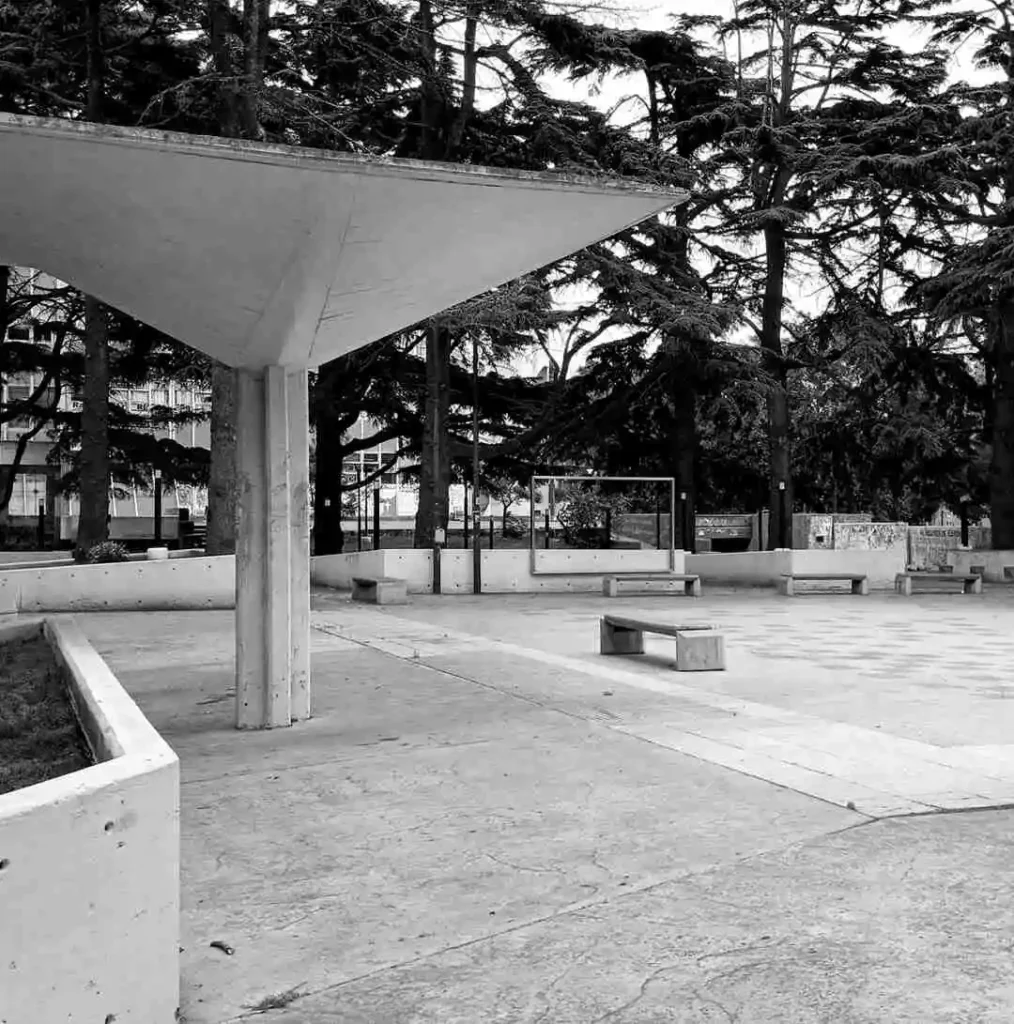
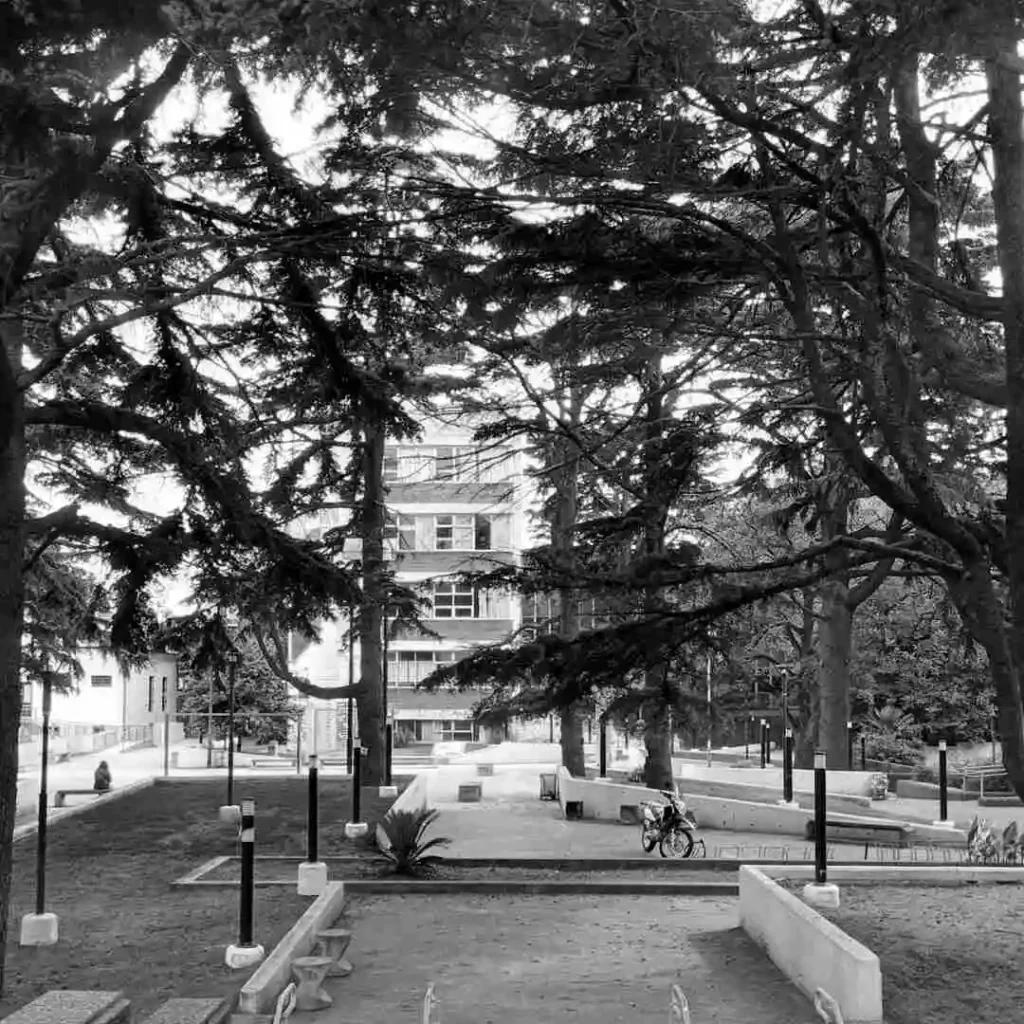
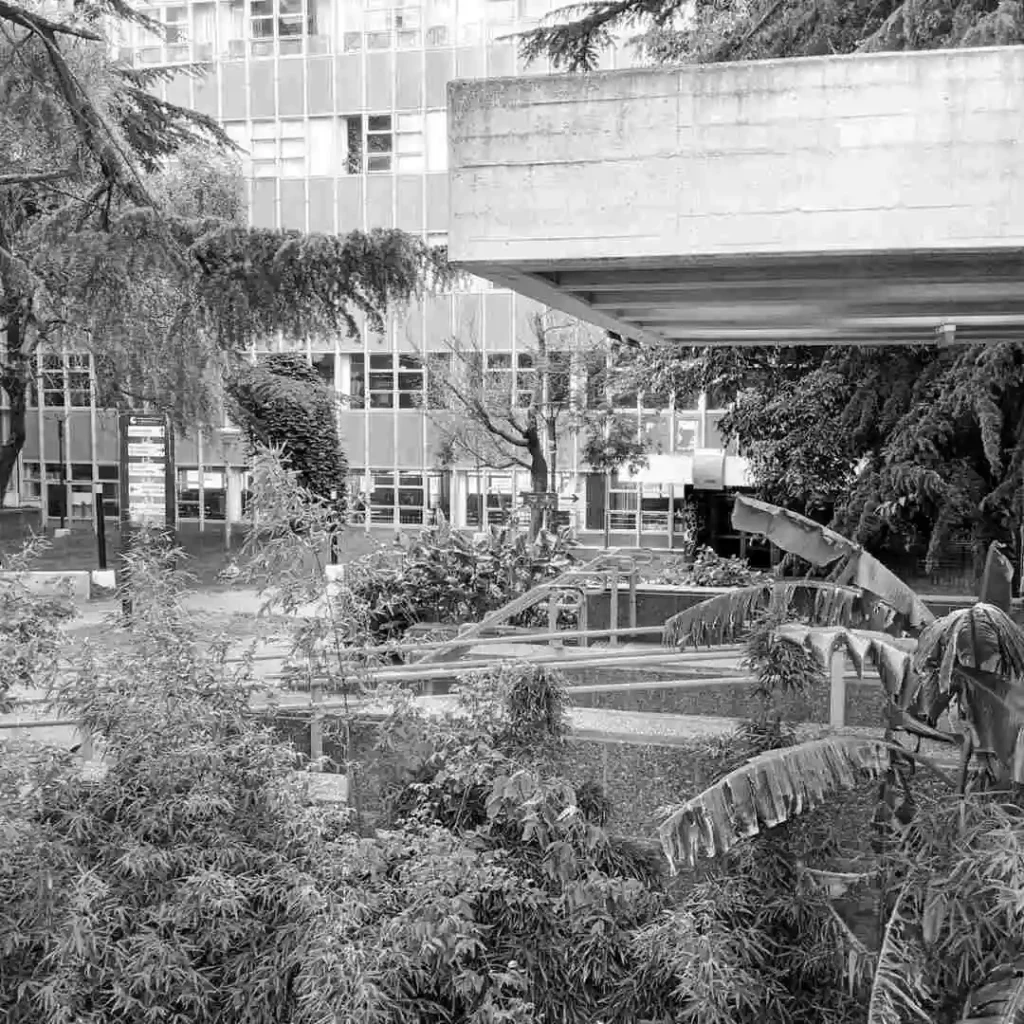
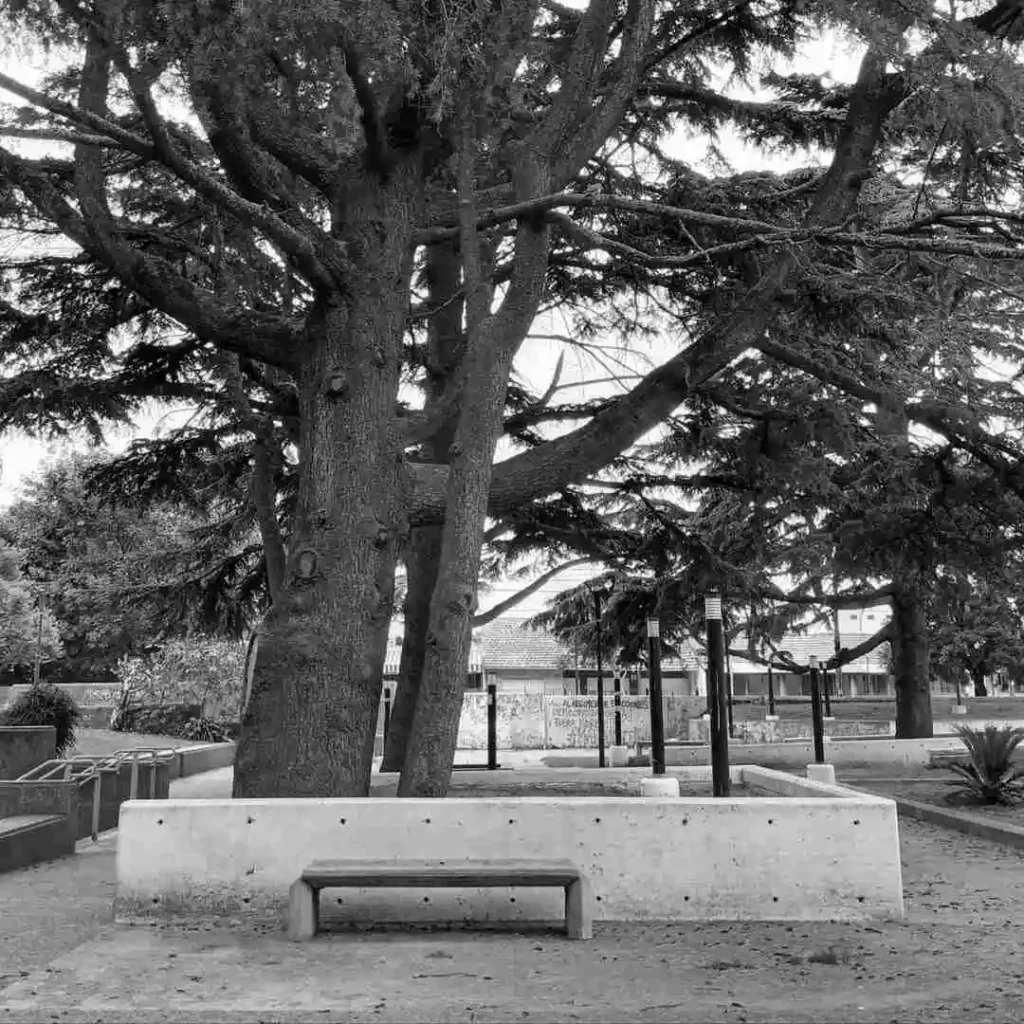
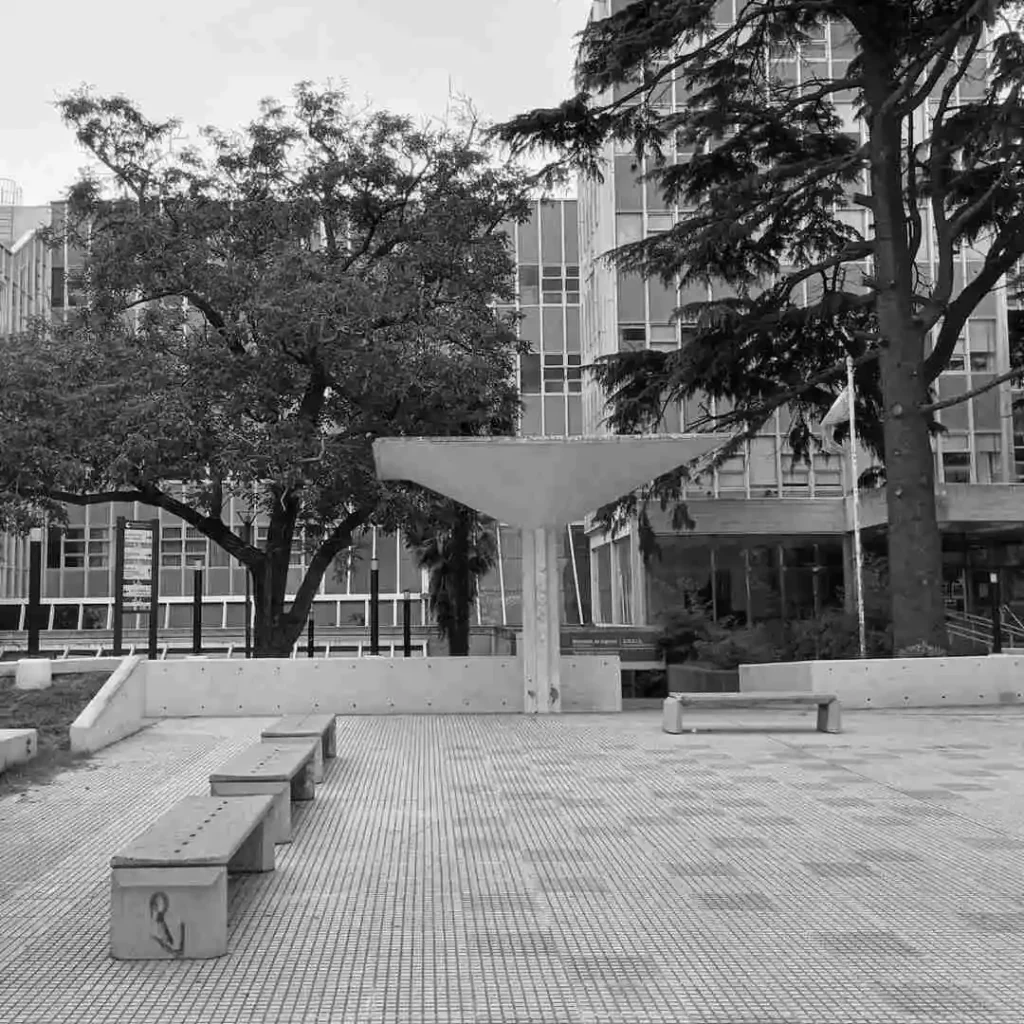
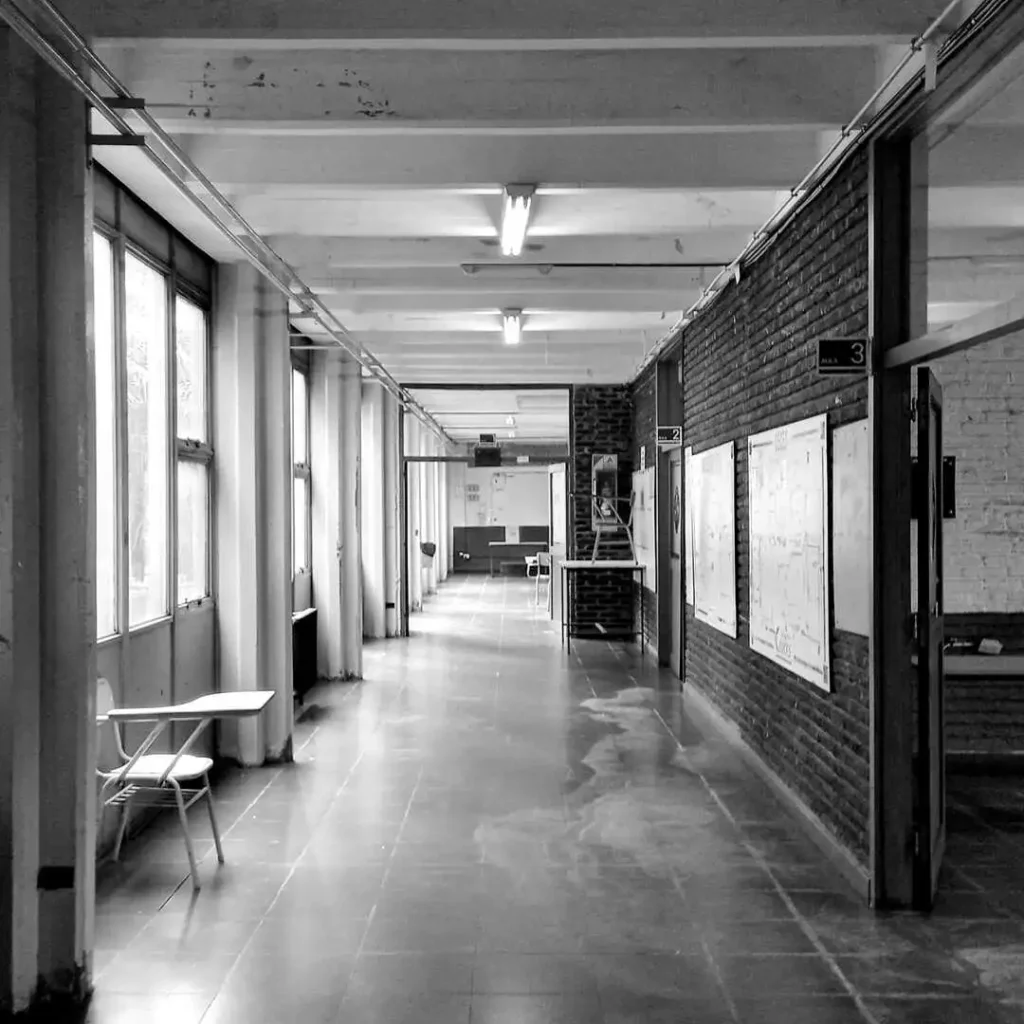
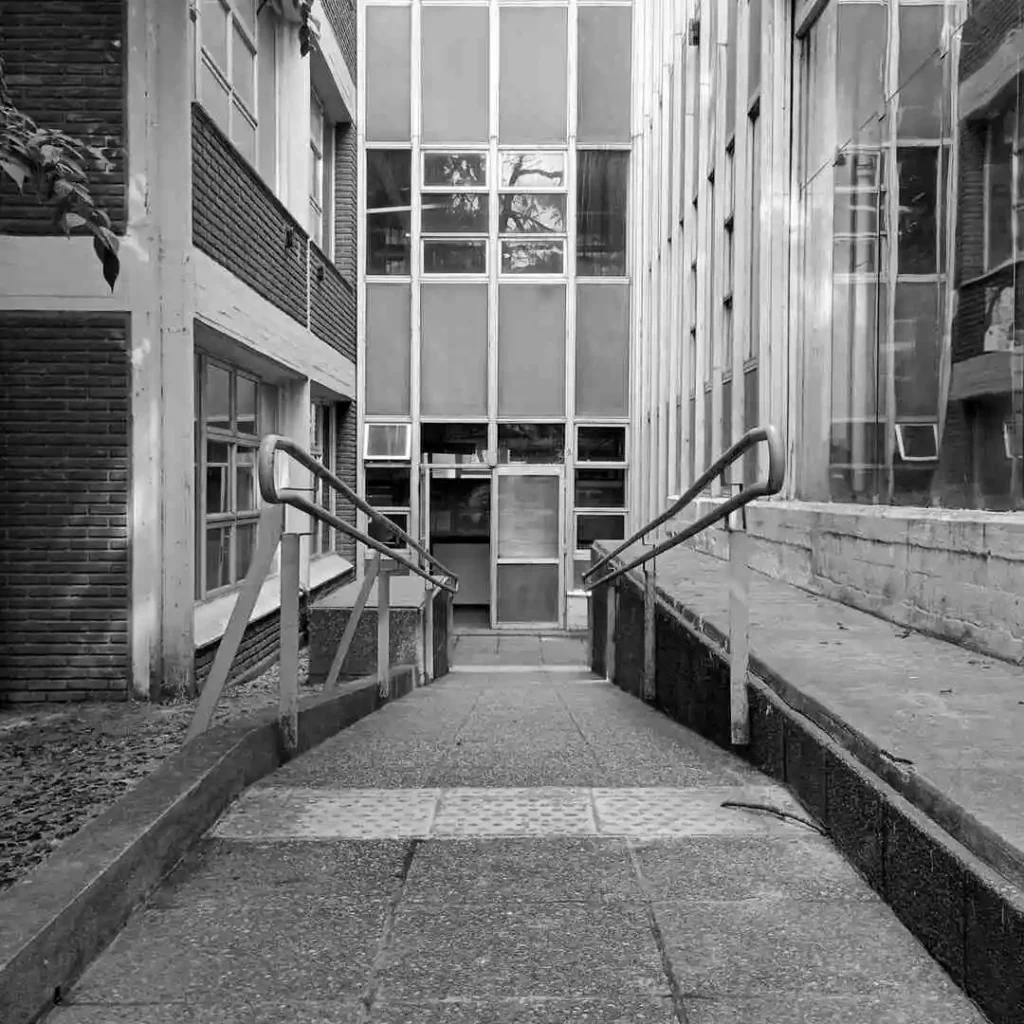
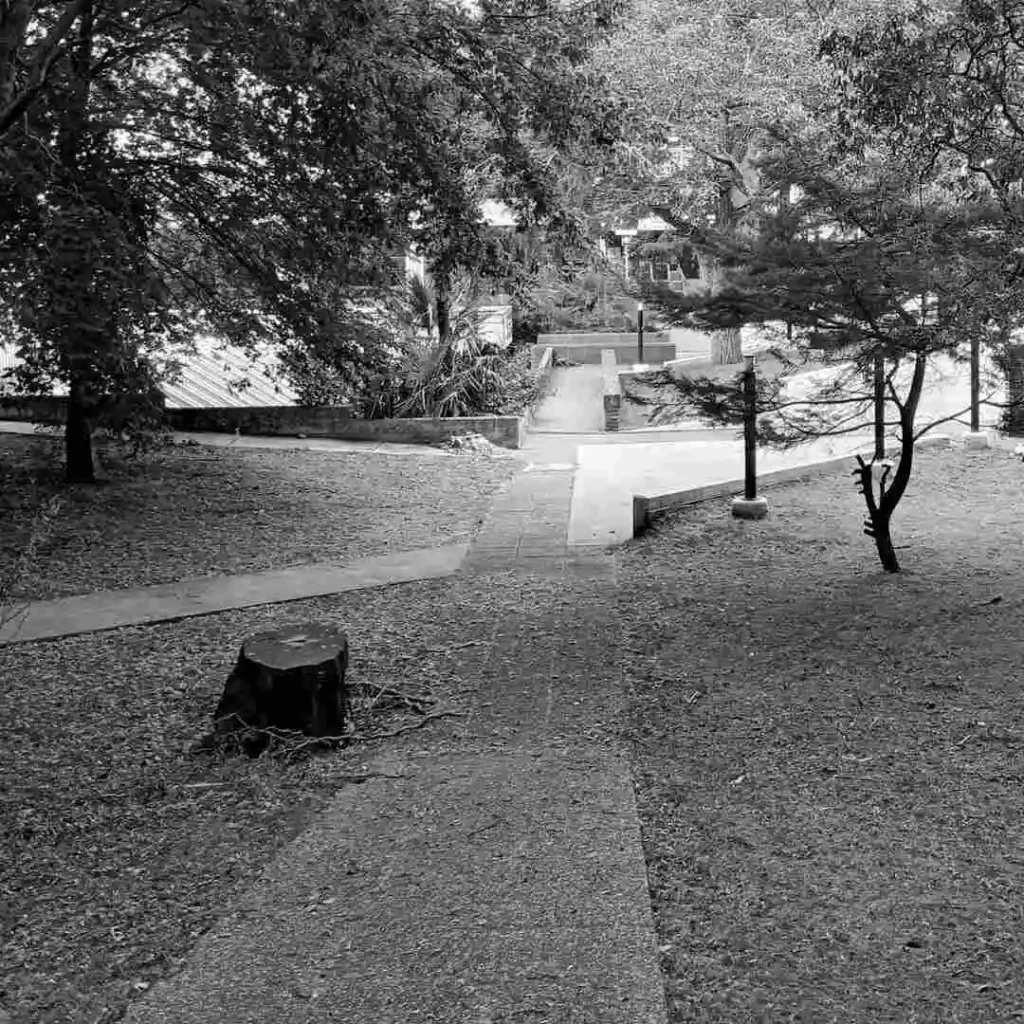
When a conceptual artefact is photographed in the absence of people, it is easy to mistake it for an empty shell. Yet the absence of human figures does not signify emptiness. It reveals that artificial environments acquire meaning only through the relationships they establish with those who inhabit them.
Institutional buildings are material manifestations of conceptual artefacts. As devices, they organise behaviour through spatial structures, predetermined functions, and implicit rules. Their architecture is never neutral. Every artefact embodies the technological, economic, political, and cultural conditions of its time, while simultaneously shaping the ways in which people perceive, think, and interact with one another.
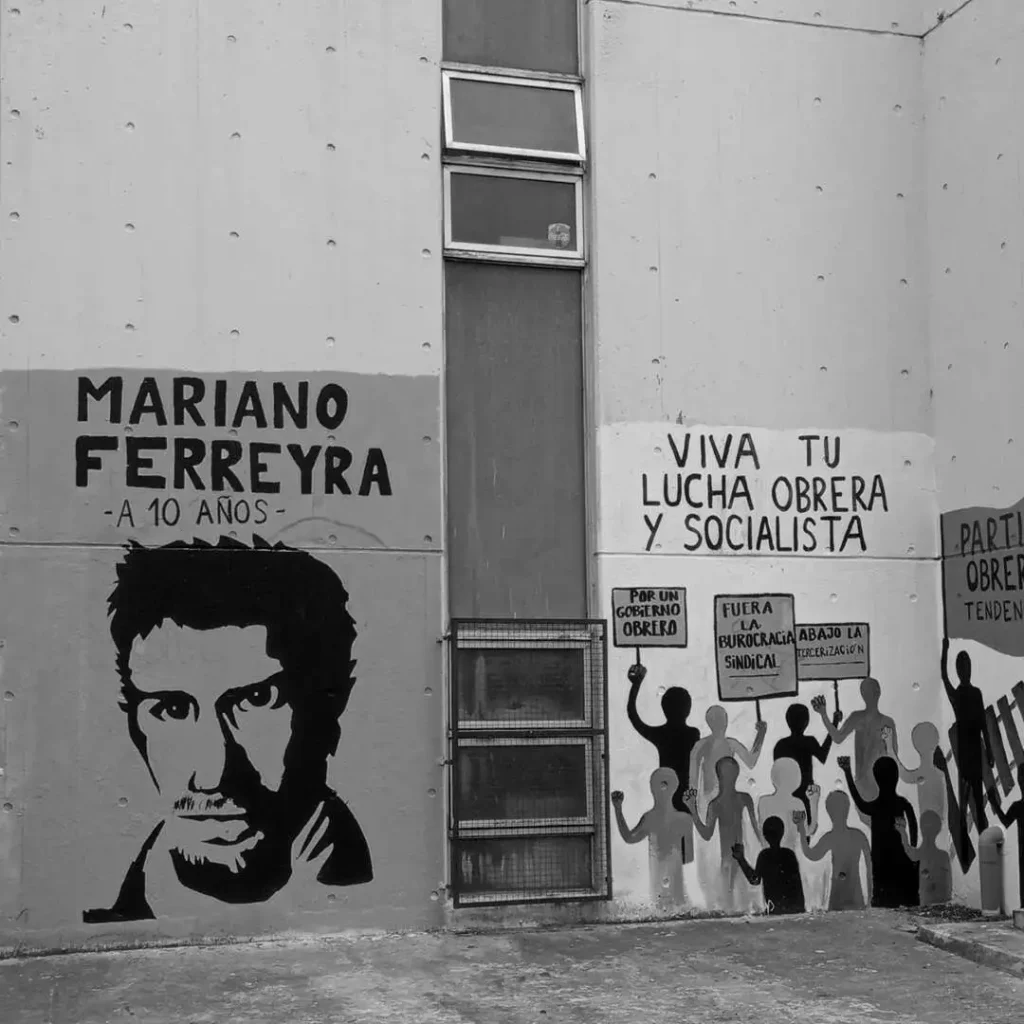
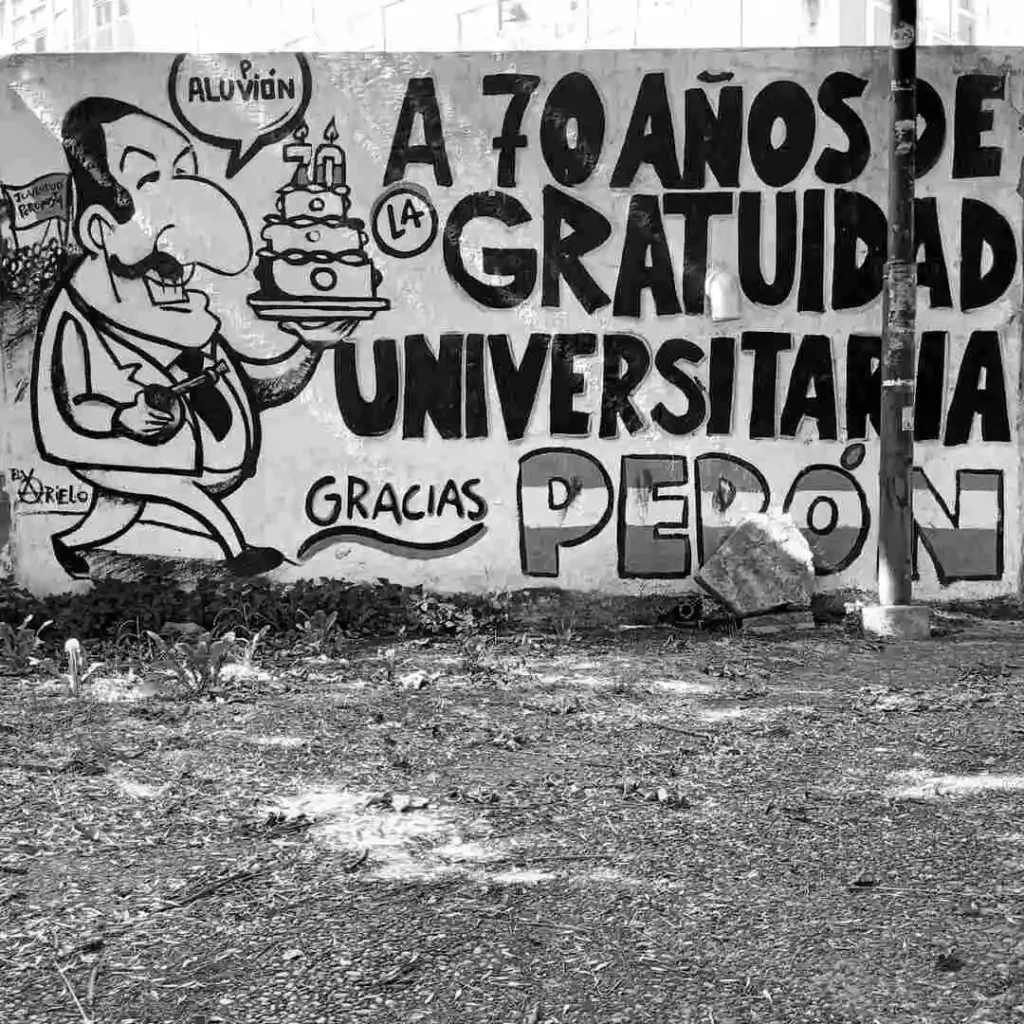
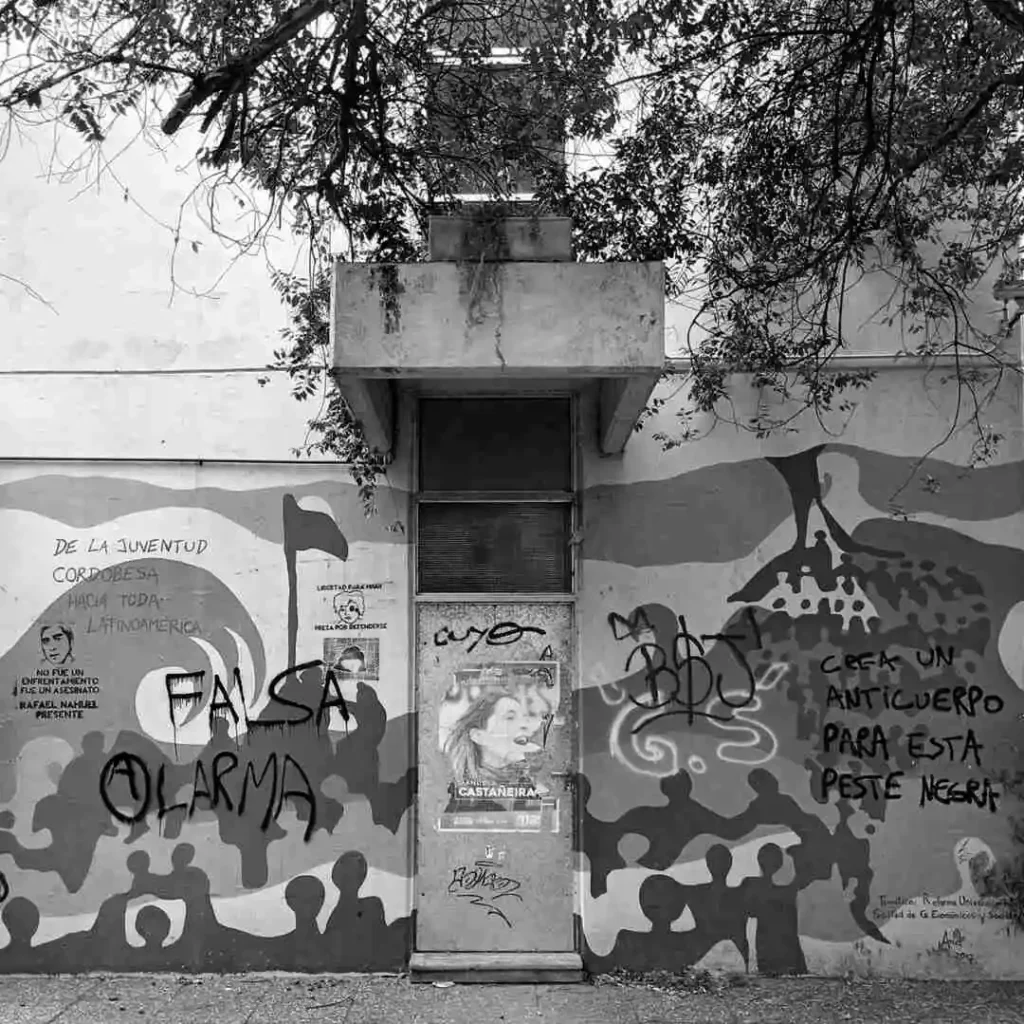
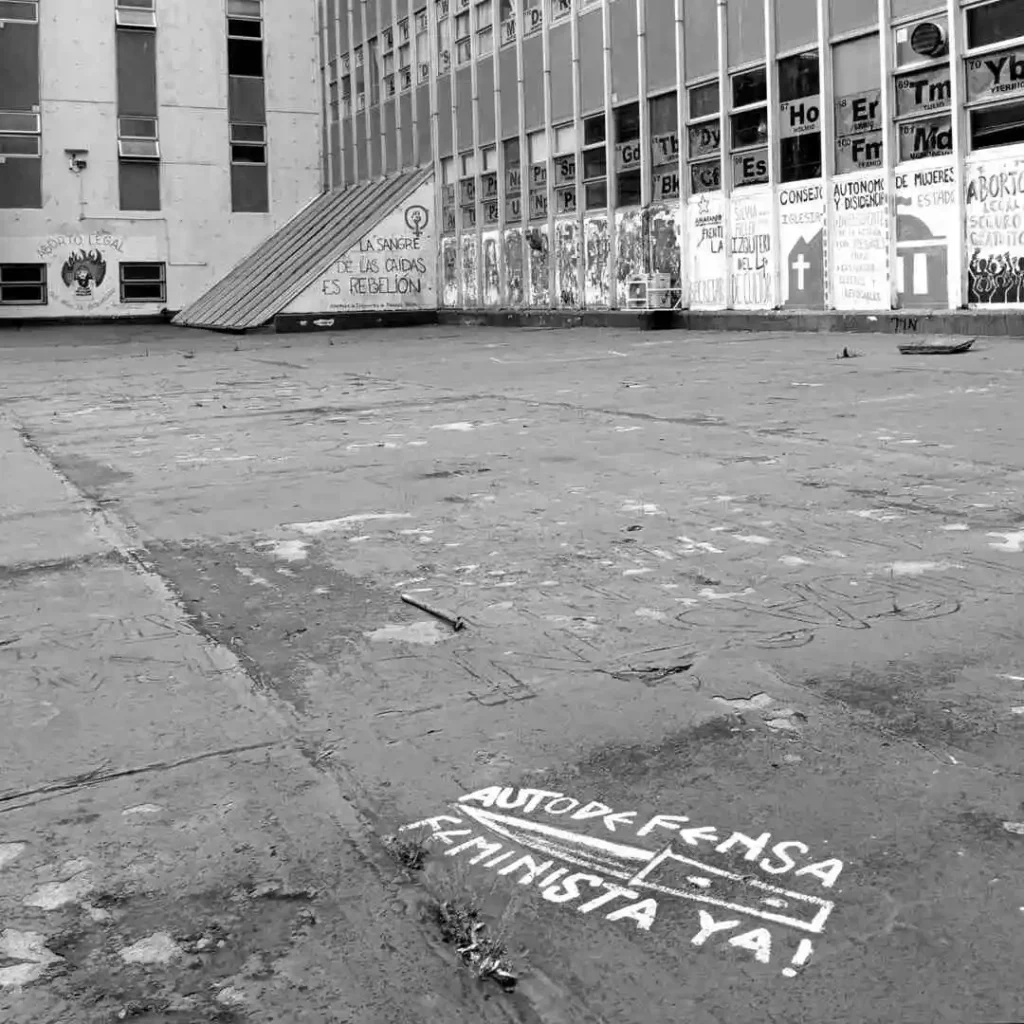
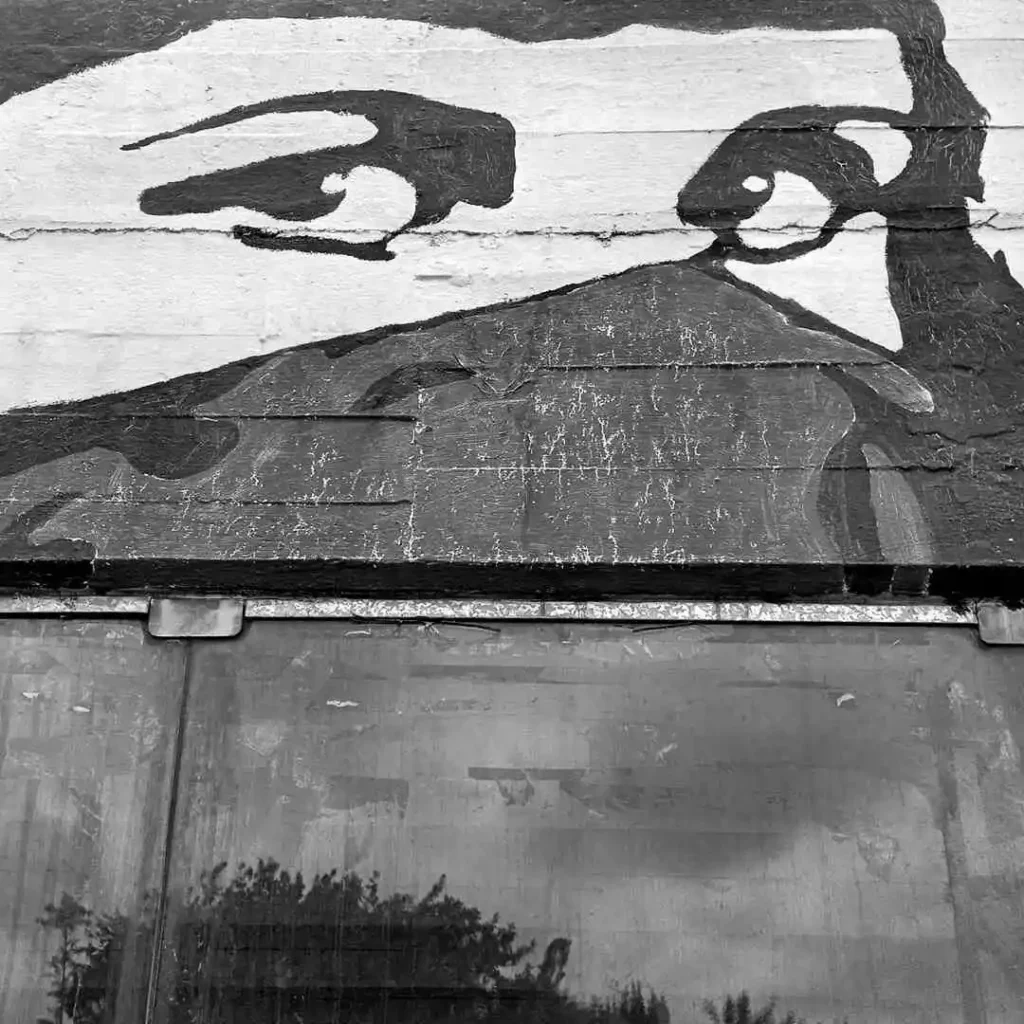
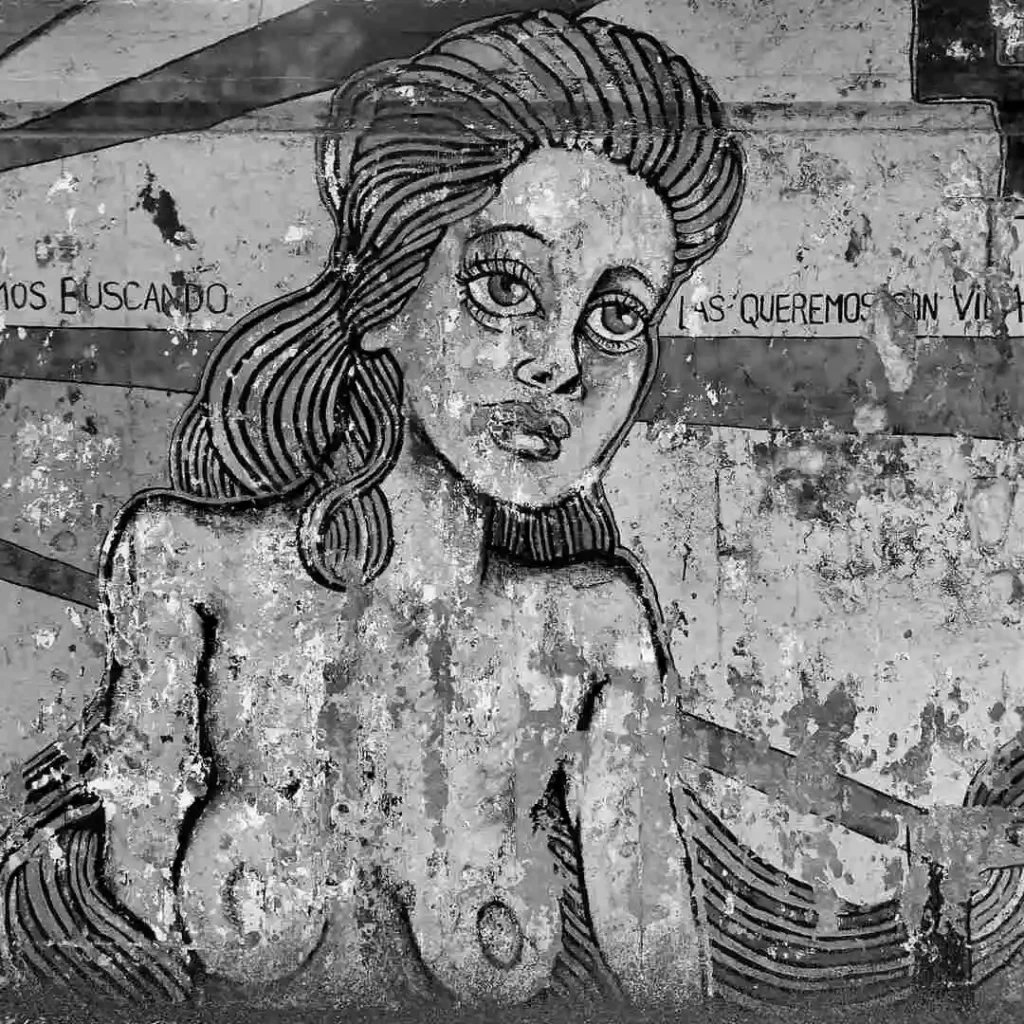
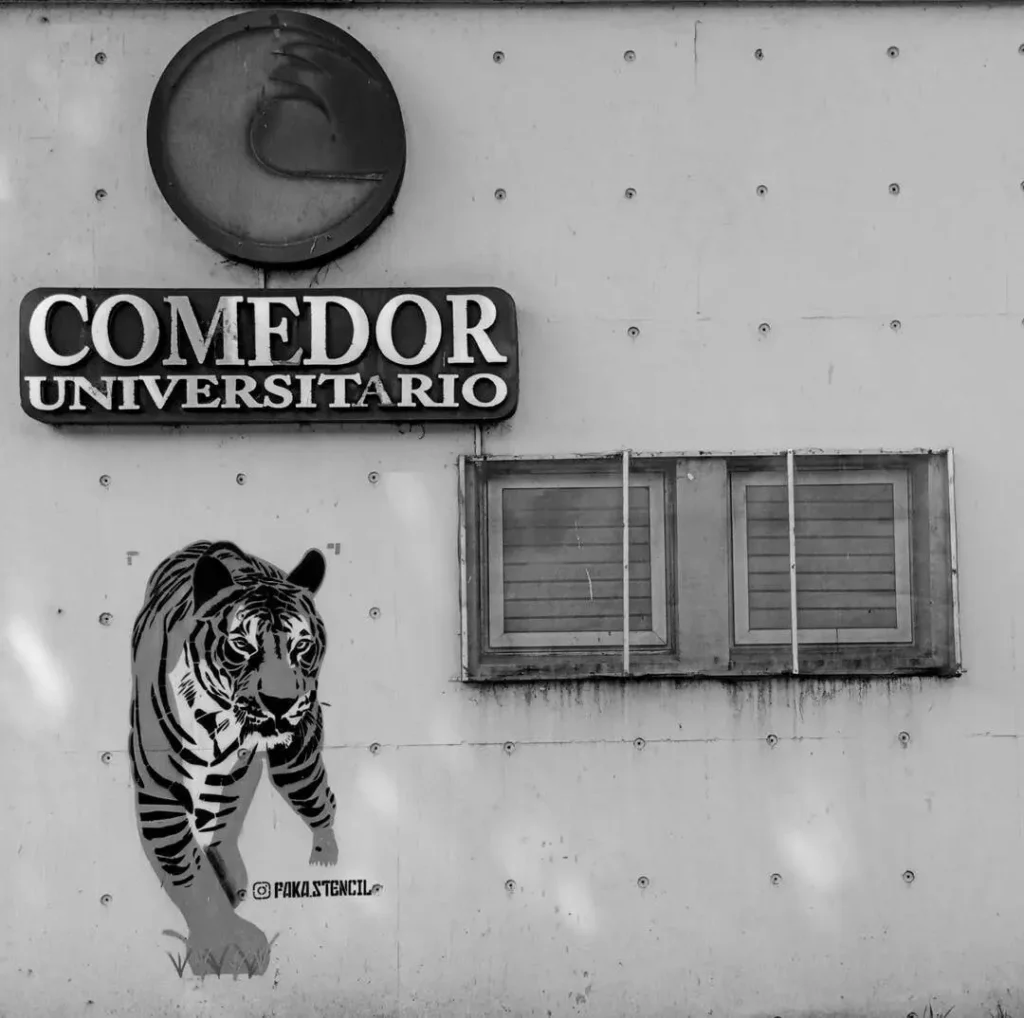
The Manuel Belgrano University Complex is understood here not simply as a collection of buildings, but as the material expression of a broader institutional idea. Within the conceptual framework of Interfascze, the building operates simultaneously as Fase—its physical materiality, Face—its visible surface, marked by traces, inscriptions, and collective interventions, and Faze—the transsubjective system of meanings activated through the relationship between institution, architecture, and society.
Joan Costa observed that identity photography often relies on sequential images taken from different viewpoints in order to describe an object as completely as possible. He also distinguished these sequences from narrative photography, where individual images become fragments of a larger visual discourse. This series adopts that logic. Rather than constructing a single iconic image, it assembles a sequence whose meaning emerges only through the relationships established between photographs.
The inscriptions, graffiti, posters, signs, and marks accumulated on the surfaces of the university become evidence of countless anonymous interactions. They reveal the continuous dialogue between an institution and the individuals who inhabit it. Each intervention is simultaneously personal and collective: the trace of a subject that contributes to the construction of a shared "us."
These photographs are taken from the perspective of a passerby who chooses to stop and observe. They record spaces that remain publicly visible, yet whose everyday familiarity often conceals their symbolic complexity. The walls become a democratic surface upon which memory, disagreement, identity, and belonging are continually negotiated.
Silence and absence reveal a different kind of presence. Deprived of their usual occupants, these spaces expose the invisible structure that sustains them. The architecture and the marks inscribed upon it become partial testimonies of a living institution—fragments of an unfinished narrative in which individual experience and collective identity remain inseparable. One Subject / One Us”.
The quotations by Joan Costa, Luiz Achutti, and Paul Valéry are reproduced from "Clic! Fotografía y sociedad", a thematic anthology edited by Guido Indij and Ana Silva, published by La Marca Editora.