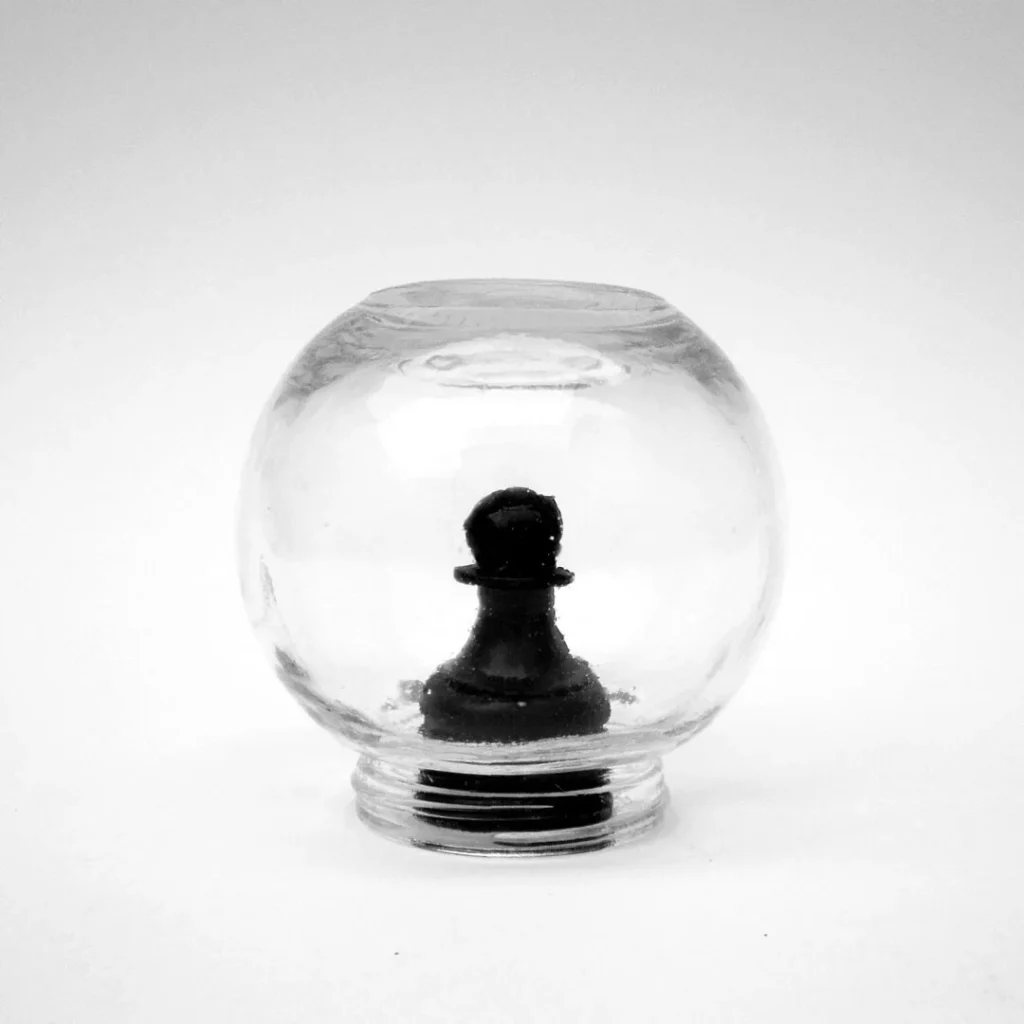
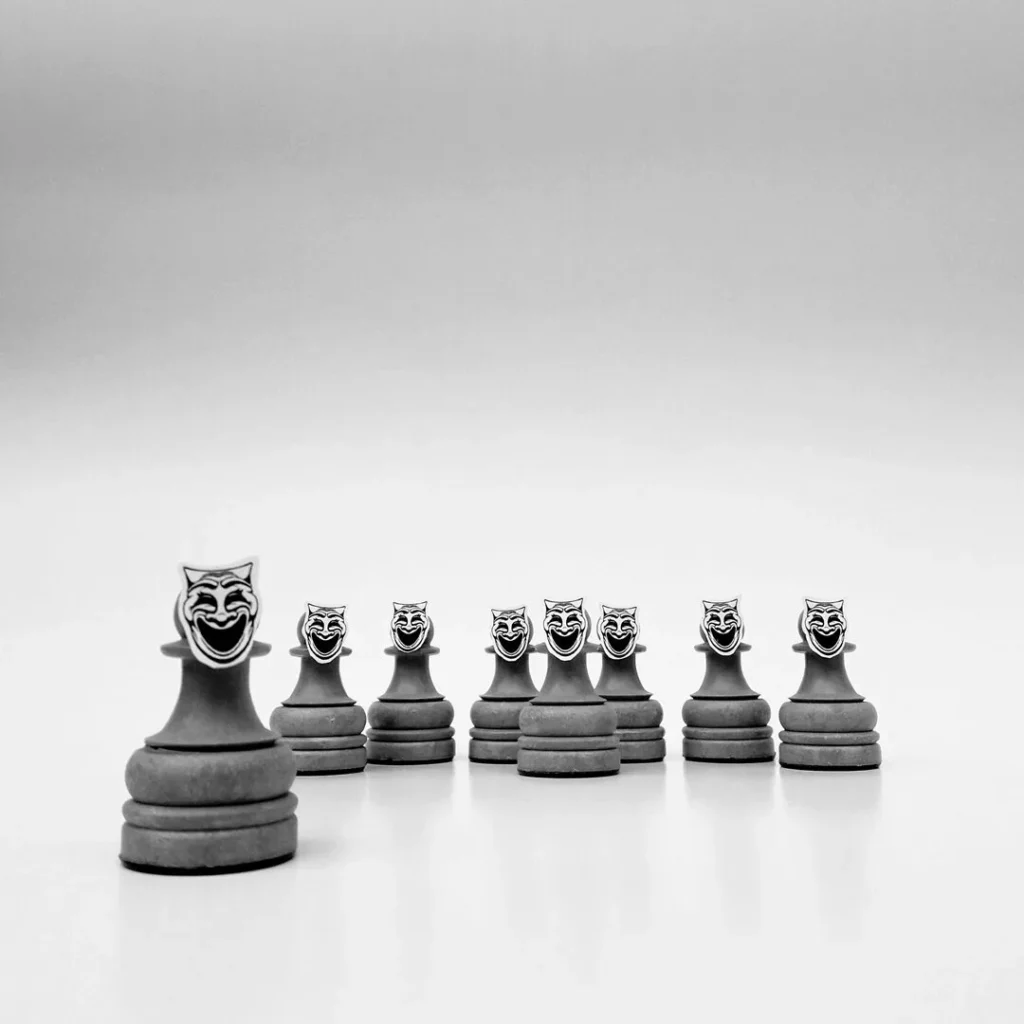
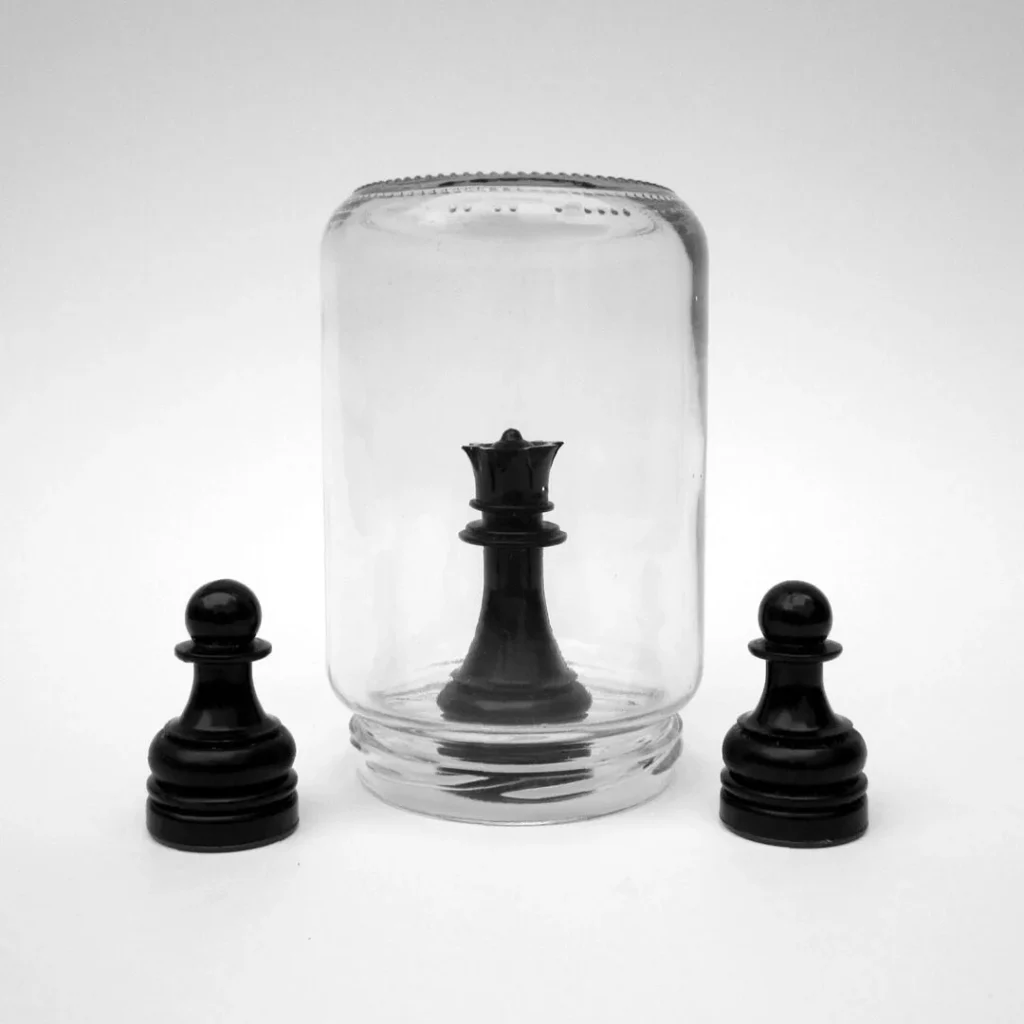
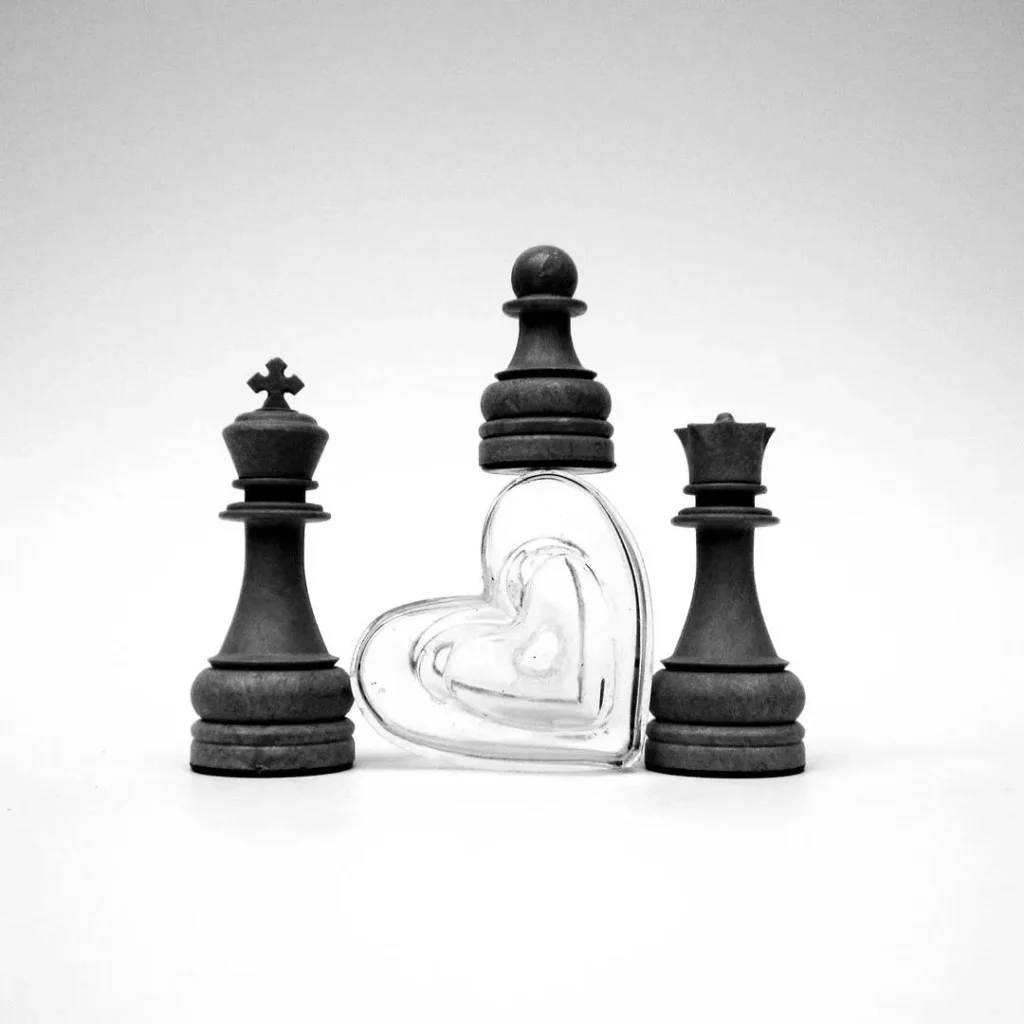
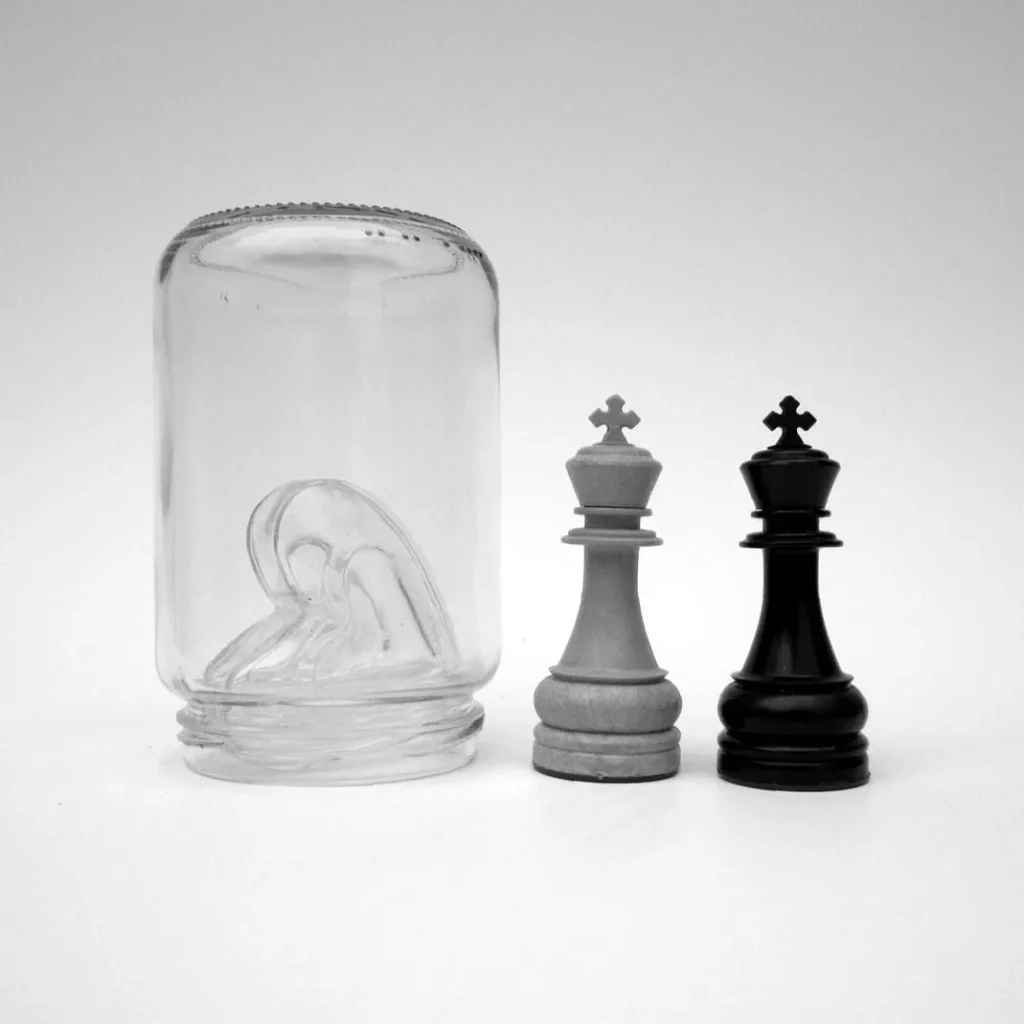
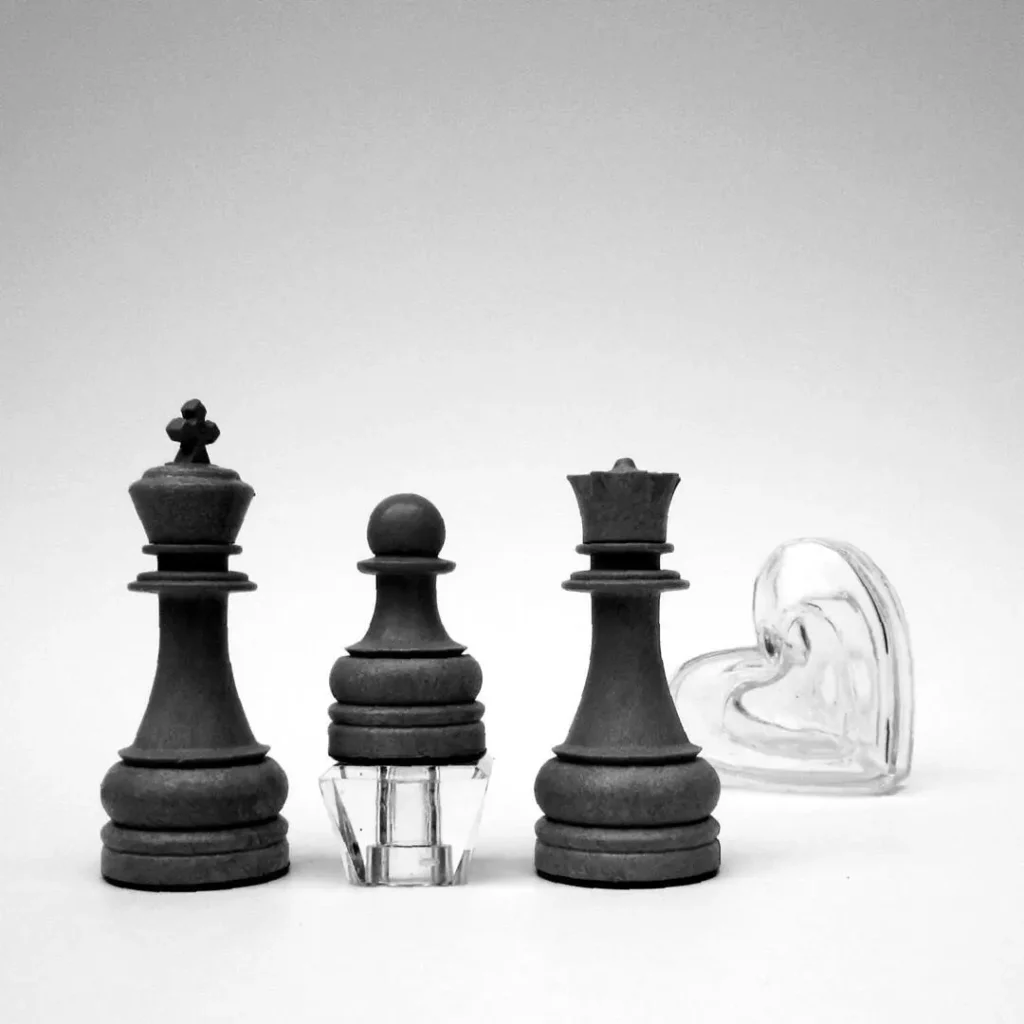
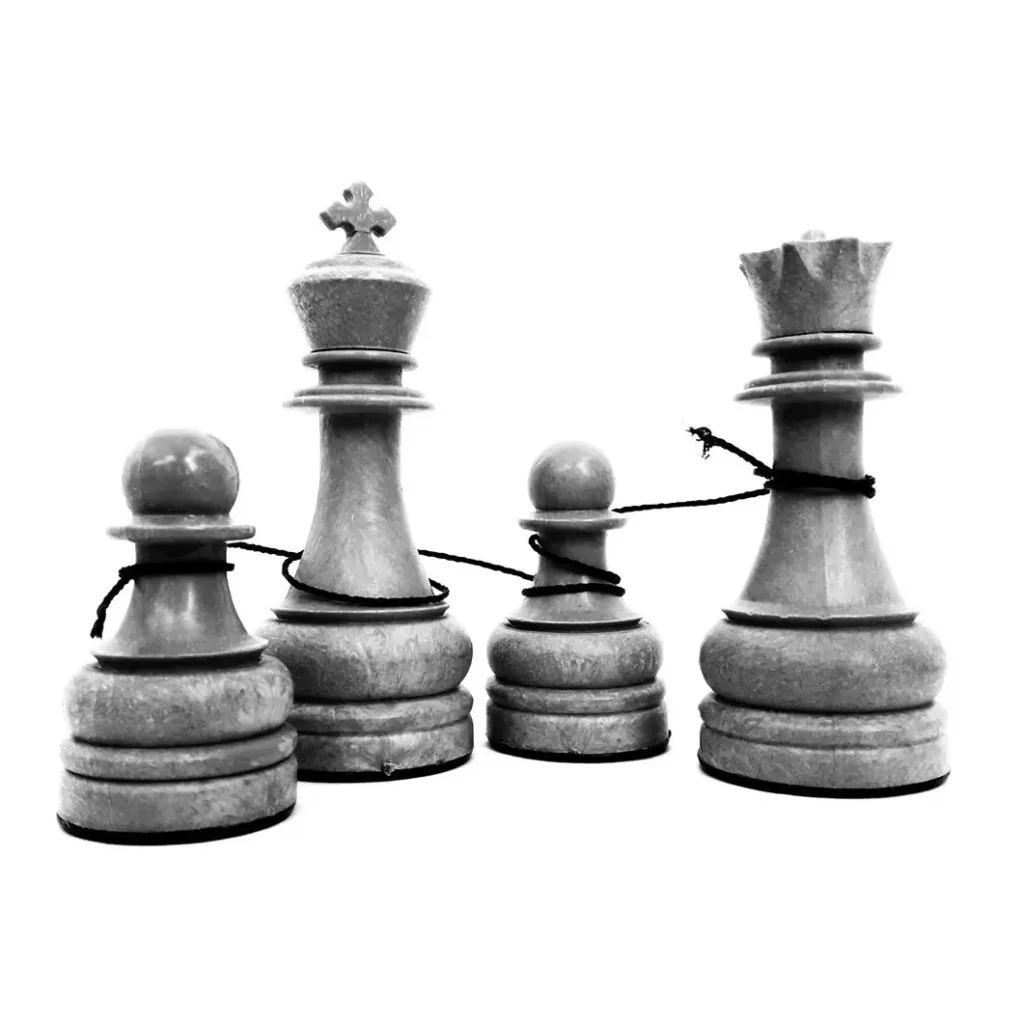
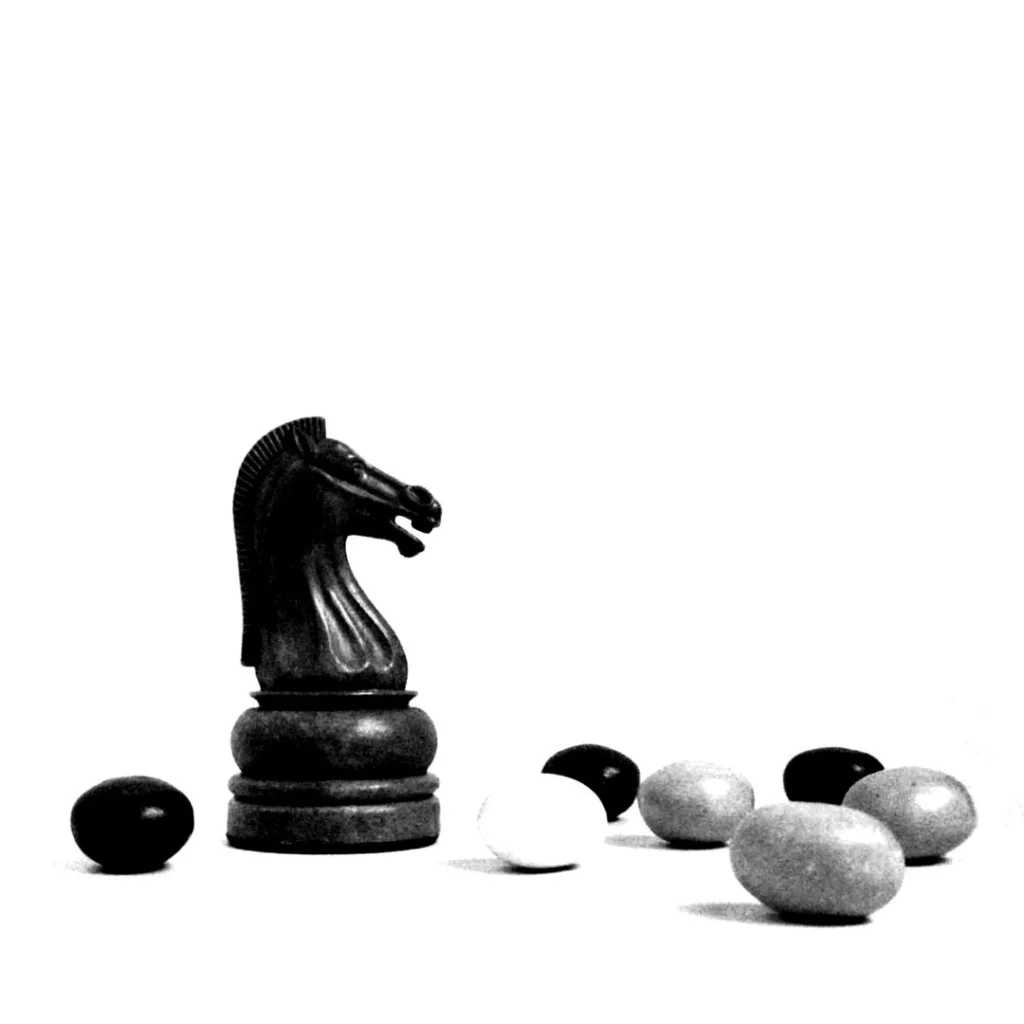
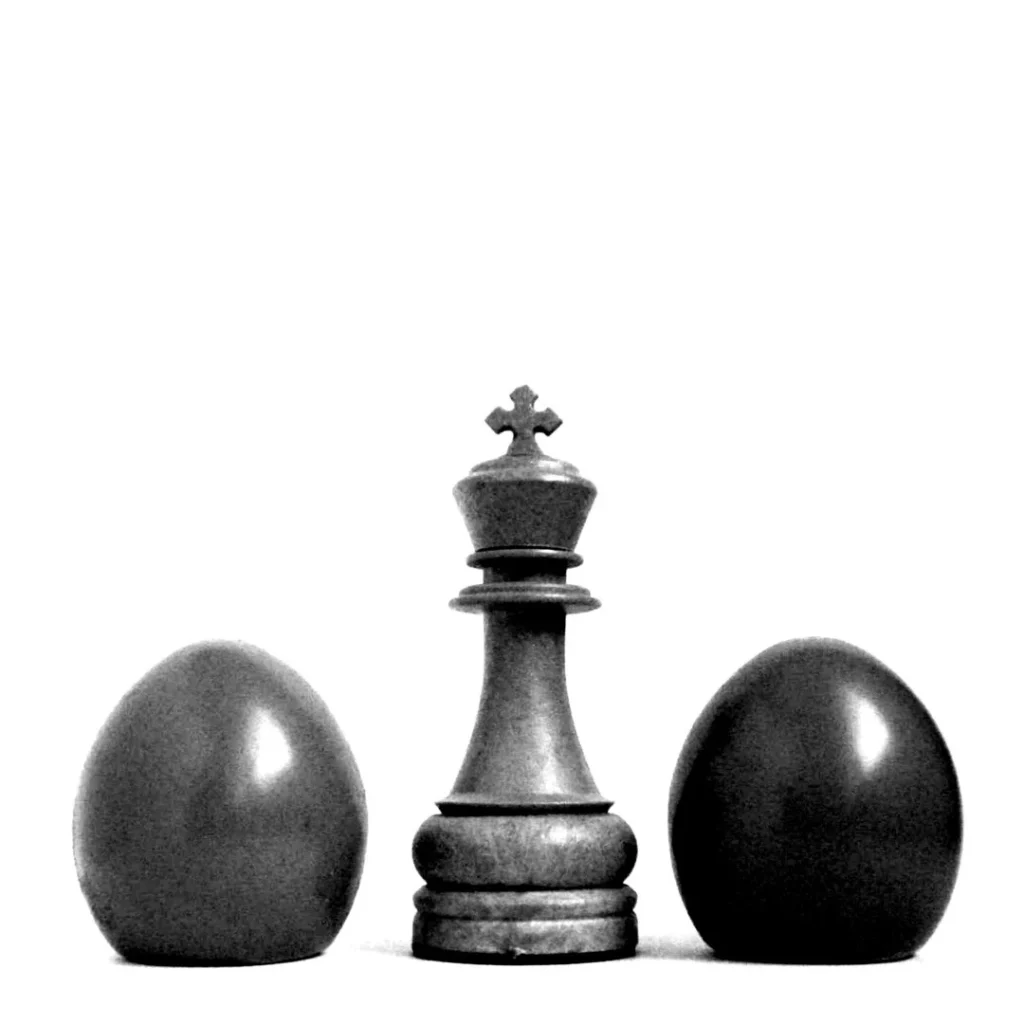
About Chess is a photographic series that uses the chessboard as a symbolic device to reflect on the relationship between the individual, structure, and destiny. Rather than approaching chess as a mere game, the series understands it as a representational system in which passions, conflicts, and socially internalised rules are brought into play.
Within its historical and cultural dimension, chess functions here as a metaphor for habitus: the set of invisible dispositions that shape the ways we think, act, and perceive the world. Every game becomes a choreography of seemingly free decisions that are, in fact, deeply structured by pre-existing rules, hierarchies, and assigned roles. In this sense, the pieces do not simply move across the board—they are moved, just as individuals operate within systems that precede them.
Executed in black and white and stripped of all spectacle, the photographs construct a restrained, almost introspective space. The tabletop becomes a mental stage where the external and the internal overlap. The absence of human figures intensifies this tension: the player is implied but never seen, an absent presence that governs without revealing itself.
The series enters into dialogue with a literary and philosophical tradition that has treated chess as an image of the world—from Jorge Luis Borges and Julio Cortázar to Lewis Carroll and Pedro Calderón de la Barca. In each case, the chessboard emerges as a territory where free will and determinism, chance and strategy, dream and wakefulness confront one another. About Chess belongs to this lineage, not to illustrate it, but to translate it into visual form. About Chess se inscribe en esa genealogía, no para ilustrarla, sino para traducirla visualmente.
Each photograph functions as a fragment of a larger narrative. There are no definitive moves and no closed endings. The board remains open, charged with possibilities, latent tensions, and silence. In this context, photography does not document a particular game; rather, it questions the very structure of the game itself and, by extension, the structure of social life.
Ultimately, About Chess proposes a visual reflection on the ways human beings inhabit systems that contain them, exceed them, and ultimately shape who they become. The chessboard becomes an Interfascze: a threshold where subject, artefact, and social structure continuously constitute one another.. Every move is simultaneously an individual decision and the expression of a system that makes that decision possible.